
High-purity ethanol · United Arab Emirates
Purity is a document,
not a promise.
ATHIR supplies high-purity ethanol to pharmaceutical and fragrance manufacturers. Every consignment leaves with the documentation a quality department needs, and every claim we make is one we can put a certificate behind.
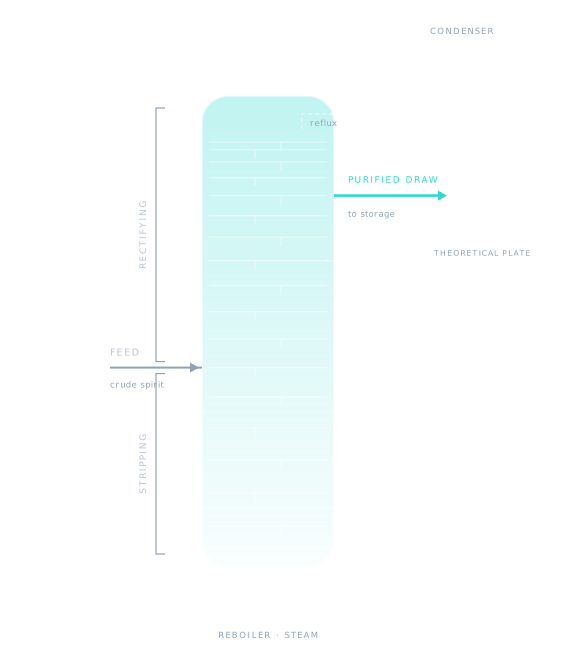
What we supply
Ethanol, held to the standard the application demands
The molecule is the same in every drum. What changes between one grade and the next is how much of everything else has been taken out of it, and how much of that can be evidenced. We work to the specification a customer brings us, and we say so in writing before the first delivery.
Pharmaceutical use
Ethanol for pharmaceutical manufacture — as a solvent, a vehicle, an extraction medium or a formulation aid. Supplied against the pharmacopoeial standard cited in your dossier, with the qualification documentation a regulatory affairs team will ask for.
Perfumery use
Ethanol for fine fragrance, attar, air care and personal care, where the carrier has to disappear completely as it dries. This is an organoleptic requirement as much as an analytical one, and it is specified and checked as one.
Industrial & technical use
Ethanol for solvent duty, extraction, cleaning, coatings and general manufacturing — including denatured product prepared to the formula your destination market recognises.
Grades, specifications and pack sizes are confirmed against your requirement at enquiry, and stated on the quotation and on every certificate of analysis. We do not publish a fixed catalogue, because the useful answer depends on what you are making.
Why it matters
Most ethanol is bought on one number
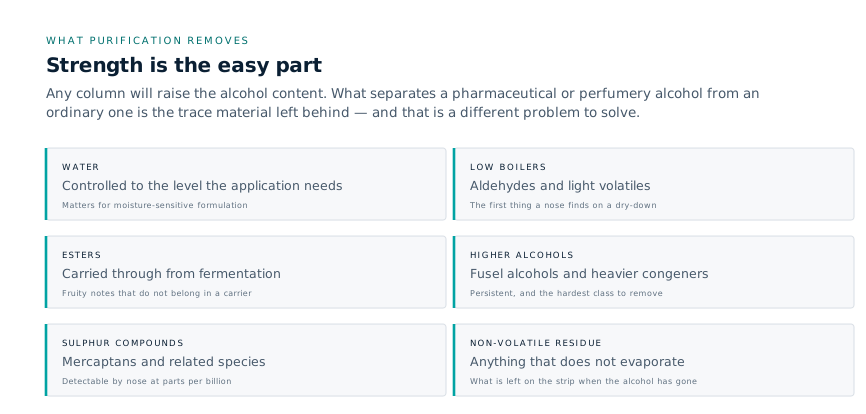
Alcohol strength is the number on every quotation, and it is the least interesting thing about a high-purity ethanol. Two materials at the same strength can behave completely differently in a formulation, because what separates them is the trace material neither of them mentions.
For a fine fragrance that difference is the whole product — the alcohol is the largest single ingredient in the bottle, and anything that survives the dry-down ends up on the skin. For a pharmaceutical preparation it is a residual-impurity question that your own quality system will eventually have to answer.
Who we supply
Two industries with opposite failure modes
Pharmaceutical manufacture
A failure here is a documentation failure — an impurity nobody declared, a supplier nobody can evidence, a process change nobody was told about. It surfaces in an inspection, months later, and it is expensive.
Fine fragrance & personal care
A failure here is sensory and immediate — a batch that carries a faint note of something on the dry-down. Nobody needs a laboratory to find it, and the customer usually finds it first.